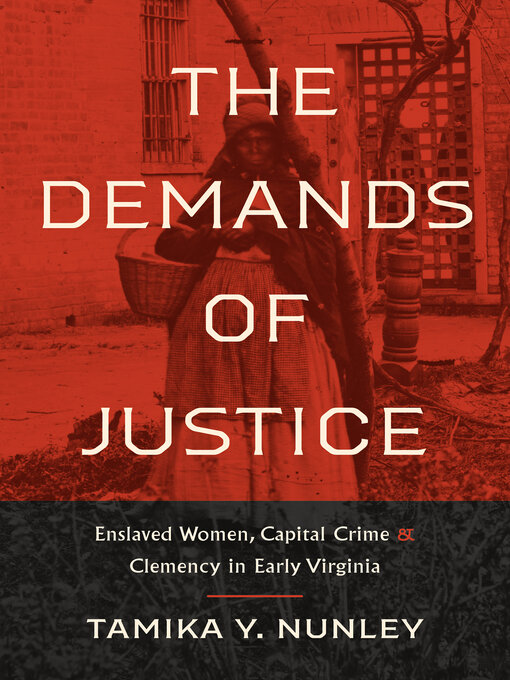
Award-winning historian Tamika Y. Nunley has unearthed the stories of enslaved Black women charged by their owners with poisoning, theft, murder, infanticide, and arson. While free Black and white people accused of capital crimes received a hearing, trial, and, if convicted, an opportunity to appeal, none of these options were available to enslaved people. Conviction was final, and only the state or owners could spare their accused chattel of punishment by death. For enslaved women in Virginia, clemency was not uncommon, but Nunley shows why this act ultimately benefitted owners and punished the accused with sale outside of the state as the best possible outcome.
Demonstrating how crimes, convictions, and clemency functioned within a slave society that upheld the property interests of white Virginians, Nunley reveals the frequency with which owners preferred to keep the accused in bondage, which allowed them, behind the veil of paternalism, to continue to benefit from Black women’s labor. This so-called clemency also sought to rob Black women of the power they exercised when they committed capital crimes. The testimonies that Nunley has collected and analyzed offer compelling glimpses of the self-identities forged by Black women as they attempted to resist enslavement and the limits of justice available to them in the antebellum courtroom.
- Available now
- Banned Books Week: Always Avaiable Titles
- California Authors
- Most popular
- At the End of All Things--Complete Fantasy Series
- Crime Queens of the Golden Age
- Try something different
- True Adventure Stories
- Bookish Romance
- See all ebooks collections
- Audiobooks for the Drive to Las Vegas
- Audiobooks for the Drive to Palm Springs
- Audiobooks for the Drive to San Francisco
- Available now
- Audiobooks for the Whole Family
- Uplifting Listens
- Most Popular Audio Between 1 and 3 Hours
- New audiobook additions
- Listen While You Run: Audiobooks for Workouts
- Try something different
- Most popular
- See all audiobooks collections