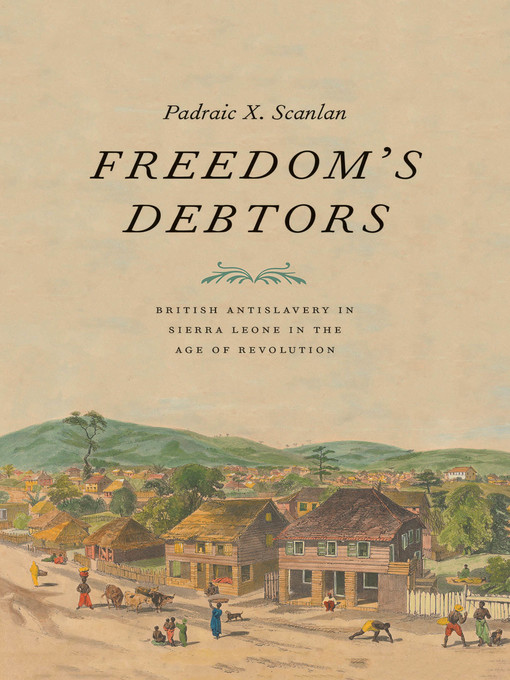
A history of the abolition of the British slave trade in Sierra Leone and how the British used its success to justify colonialism in Africa
British anti-slavery, widely seen as a great sacrifice of economic and political capital on the altar of humanitarianism, was in fact profitable, militarily useful, and crucial to the expansion of British power in West Africa. After the slave trade was abolished, anti-slavery activists in England profited, colonial officials in Freetown, Sierra Leone, relied on former slaves as soldiers and as cheap labor, and the British armed forces conscripted former slaves to fight in the West Indies and in West Africa.
At once scholarly and compelling, this history of the abolition of the British slave trade in Sierra Leone draws on a wealth of archival material. Scanlan's social and material study offers insight into how the success of British anti-slavery policies were used to justify colonialism in Africa. He reframes a moment considered to be a watershed in British public morality as rather the beginning of morally ambiguous, violent, and exploitative colonial history.
- Available now
- Banned Books Week: Always Avaiable Titles
- California Authors
- Most popular
- At the End of All Things--Complete Fantasy Series
- Crime Queens of the Golden Age
- Try something different
- True Adventure Stories
- Bookish Romance
- See all ebooks collections
- Audiobooks for the Drive to Las Vegas
- Audiobooks for the Drive to Palm Springs
- Audiobooks for the Drive to San Francisco
- Available now
- Audiobooks for the Whole Family
- Uplifting Listens
- Most Popular Audio Between 1 and 3 Hours
- New audiobook additions
- Listen While You Run: Audiobooks for Workouts
- Try something different
- Most popular
- See all audiobooks collections