 Jun 06 2026
 May 30 2026
 May 23 2026
 May 16 2026
 May 09 2026
 May 02 2026
 Apr 25 2026
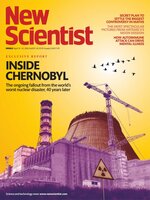 Apr 18 2026
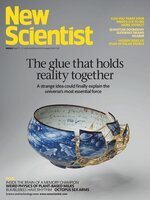 Apr 11 2026
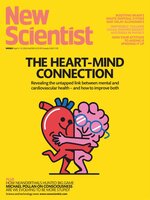 Apr 04 2026
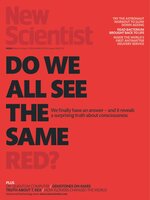 Mar 28 2026
 Mar 21 2026
 Mar 14 2026
 Mar 07 2026
 Feb 28 2026
 Feb 21 2026
 Feb 14 2026
 Feb 07 2026
 Jan 31 2026
 Jan 24 2026
 Jan 17 2026
 Jan 10 2026
 Jan 03 2026
 Dec 27 2025
New Scientist covers the latest developments in science and technology that will impact your world. New Scientist employs and commissions the best writers in their fields from all over the world. Our editorial team provide cutting-edge news, award-winning features and reports, written in concise and clear language that puts discoveries and advances in the context of everyday life today and in the future.
Nuclear fallout • The biggest threat to Chernobyl is no longer radiation
New Scientist
Proton puzzle finally solved • Two extremely precise experiments have agreed with a previously shocking measurement of just how big the proton actually is, reports Karmela Padavic-Callaghan
Particles seen emerging from vacuum for the first time
More signs that key ocean current is slowing around the Atlantic
Chimpanzee clash hints at evolutionary roots of war
Artemis II is a historic success • A triumphant end to NASA’s lunar flyby is just the beginning of a longer road to humans once again being able to set foot on the moon, discovers Leah Crane
Drug shows promise for Parkinson’s • Treatments that target the glymphatic system, which removes problematic proteins from the brain, could be the key to treating Parkinson’s disease, finds Carissa Wong
Boosting brain’s cleaning system could also treat migraines
We could soon settle the biggest controversy in maths
Did small prey lead to big brains? • The shift towards using lighter stone tools to hunt smaller prey may have driven the evolution of large brains in modern humans, discovers James Urquhart
Quantum batteries could be charged by reversing time
Quantum entanglement measured in a solid for the first time
Emperor penguins are now endangered
CAR T-cell therapy treats trio of diseases
Hidden fossils reveal ocean secrets • Plankton buried in a small chunk of rock may tell us more about a major mass extinction event
Sniffing out the reason why felines can be fussy eaters
Are manure digesters a real solution to dairy farm emissions? • Converting manure to biogas reduces methane emissions from livestock, but the process can also have some negative side effects, finds Alec Luhn
Iodised salt might be uncool, but many of us need more iodine • Iodine deficiency can lead to drops in IQ – and the modern fancy salt fad may be causing a resurgence, says Alice Klein
The man who ruined mathematics • The incompleteness theorem is accepted as part of the mathematical canon today, but it was a bombshell when Kurt Gödel first introduced it, says Jacob Aron.
Fake news!
Two more great books on astronomy
To boldly listen… • An imaginative and compelling book reveals how radio waves help us tune in to our universe – and even search for alien civilisations, says Karmela Padavic-Callaghan
New Scientist recommends
Hunting elusive elephants • A film about the quest for “ghost elephants” is as much about not knowing and asking the right questions as about exploration, finds Davide Abbatescianni
Your letters
Chernobyl: 40 years on • How has Russia’s invasion of Ukraine affected the site of the world’s worst nuclear disaster? On an exclusive visit, Matthew Sparkes found out
Our visit to Chernobyl • Matthew Sparkes visited various sites in the Chernobyl region of Ukraine, including the destroyed reactor, a former cooling pond and several locations in the city of Chernobyl. The region and its nuclear exclusion zone were occupied in 2022 when Russia invaded from Belarus in a bid to reach Ukraine’s capital, Kyiv
The most dangerous job in the world • Ever since the Chernobyl nuclear disaster, scientists have needed to monitor radioactivity levels inside the damaged reactor. That job currently...