In recent times, the Asia-Pacific region has far surpassed Europe in terms of reciprocal trade with the United States, and since the 1980s immigrants from Asia entering the United States have exceeded their counterparts from Europe, reversing a longstanding historical trend and making Asian Americans the country's fastest growing racial group. What does transpacific history look like if the arc of the story is extended to the present?
The essays in this volume offer answers to this question challenging current assumptions about transpacific relations. Many of these assumptions are expressed through fear: that the ascendance of China threatens a U.S.-led world system and undermines domestic economies; that immigrants subvert national unity; and that globalization, for all its transcending of international, cultural, and racial differences, generates its own forms of prejudice and social divisions that reproduce global and national inequalities. The contributors make clear that these fears associated with, and induced by, pacific integration are not new. Rather, they are the most recent manifestation of international, racial, and cultural conflicts that have driven transpacific relations in its premodern and especially modern iterations.
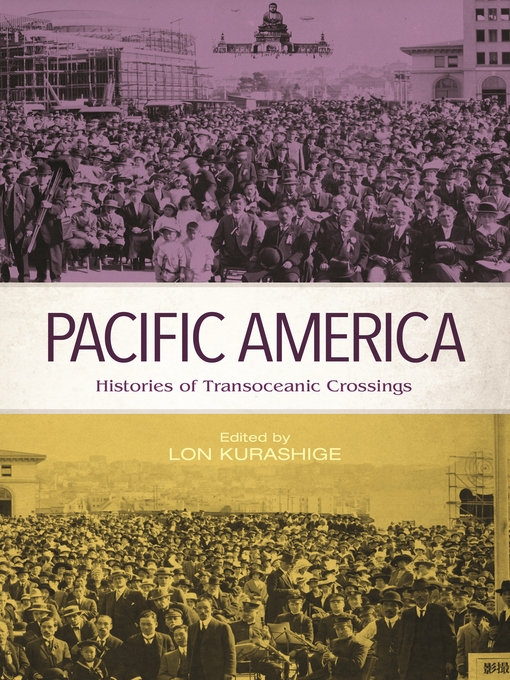
Pacific America differs from other books that are beginning to flesh out the transnational history of the Pacific Ocean in that it is more self-consciously a people's history. While diplomatic and economic relations are addressed, the chapters are particularly concerned with histories from the "bottom up," including attention to social relations and processes, individual and group agency, racial and cultural perception, and collective memory. These perspectives are embodied in the four sections focusing on China and the early modern world, circuits of migration and trade, racism and imperialism, and the significance of Pacific islands. The last section on Pacific Islanders avoids a common failing in popular perception that focuses on both sides of the Pacific Ocean while overlooking the many islands in between. The chapters in this section take on one of the key challenges for transpacific history in connecting the migration and imperial histories of the United States, Japan, China, Korea, Vietnam, and other nations, with the history of Oceania.
-
Creators
-
Lon KurashigeEditor
-
Eiichiro AzumaContributor
-
Keith L. CamachoContributor
-
Greg DvorakContributor
-
Augusto EspirituContributor
-
Peter E. HamiltonContributor
-
Brian Masaru HayashiContributor
-
Madeline Y. HsuContributor
-
Lon KurashigeContributor
-
Phuong NguyenContributor
-
Christen T. SasakiContributor
-
Elizabeth SinnContributor
-
John E. WillsContributor
-
Susie WooContributor
-
Yujin YaguchiContributor
-
Kariann Akemi YokotaContributor
-
-
Publisher
-
Release date
July 31, 2017 -
Formats
-
Kindle Book
-
OverDrive Read
- ISBN: 9780824855772
- File size: 8147 KB
-
EPUB ebook
- ISBN: 9780824855772
- File size: 8147 KB
-
-
Accessibility
-
Languages
- English
Formats
- Kindle Book
- OverDrive Read
- EPUB ebook
subjects
Languages
- English
Why is availability limited?
×Availability can change throughout the month based on the library's budget. You can still place a hold on the title, and your hold will be automatically filled as soon as the title is available again.
The Kindle Book format for this title is not supported on:
×Read-along ebook
×The OverDrive Read format of this ebook has professional narration that plays while you read in your browser. Learn more here.